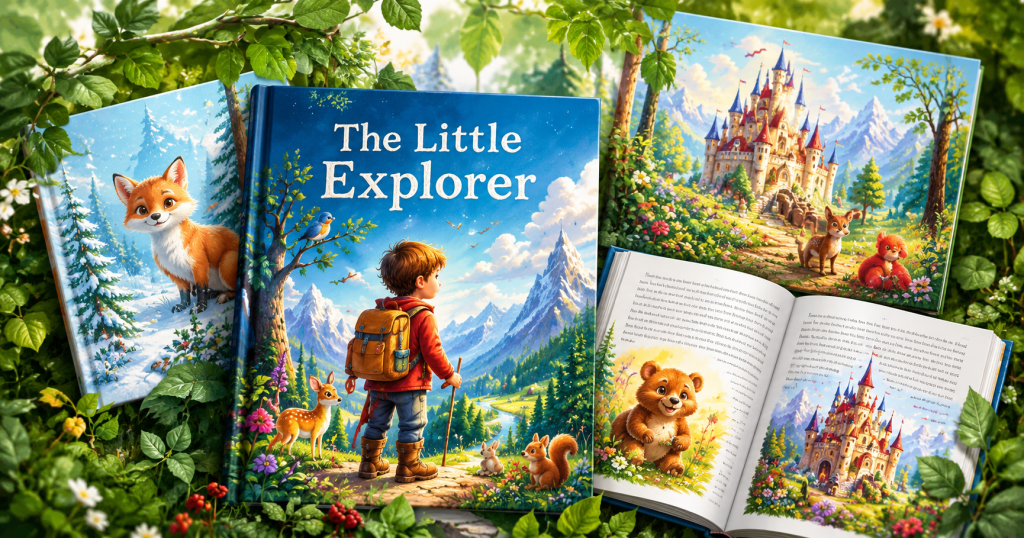
The illustration style is the first thing a child notices when they open your book. It sets the mood before a single word is read. Here are seven popular styles, what they feel like and the stories they suit best.
1. Watercolour
Soft edges, gentle colour blends and a hand-made feel. Watercolour is perfect for bedtime stories, nature tales and quiet, emotional moments.
2. Cartoon character design
Bold outlines, big expressions and bright colours. Cartoon styles bring energy and humour, and they work brilliantly for funny adventures and younger readers.
3. Digital painting
Rich colour, lighting and depth with the flexibility of digital tools. Digital painting suits magical worlds, fantasy settings and books that need dramatic, cinematic scenes.
4. Realistic illustration
Detailed, true-to-life art for non-fiction, history, animals and science books, where accuracy helps children learn.
5. Pencil and ink
Classic, textured line work, sometimes with a limited colour palette. It gives a timeless, storybook feel and works well for chapter books with spot illustrations.
6. Collage and mixed media
Paper textures, patterns and painted elements combined into playful, tactile pages. Great for concept books, poetry and creative, artistic stories.
7. Flat, graphic style
Simple shapes, clean colours and strong design. Flat illustration is modern and very readable, ideal for toddlers and educational picture books.
How to choose your style
- Think about your readers: toddlers respond to bold, simple shapes; older children enjoy more detail.
- Match the mood: calm stories suit soft styles, lively ones suit bright, energetic art.
- Look at your shelf: collect books you love and notice what they have in common.
- Ask for samples: a character sketch in two styles quickly shows what feels right.
✦ Ready when you are
Not sure which style fits?
Tell us about your story and readers, and we’ll help you find the illustration style that brings it to life.